For decades the United States has been the center of global commerce, military power, and geopolitical influence. Imagine, however, that there is one action a country could take to immediately cripple that influence and power. Now further imagine that the United States is already losing on one of those three main fronts to that exact country. While that may sound impossible, we are witnessing it happening in front of our very eyes. Now you may be wondering which country this is. The answer is China. Over the past decades, China has shifted rare earth mineral mining, processing, and manufacturing from the United States to China. Alongside a change in manufacturing control globally, it seems China is getting ever closer to usurping American geopolitical influence. In this essay, I will dive into rare earth minerals and the geopolitical shift that is happening due to a decline in American mining, a monopoly of foreign minerals, and corporate consolidation within the Chinese market.
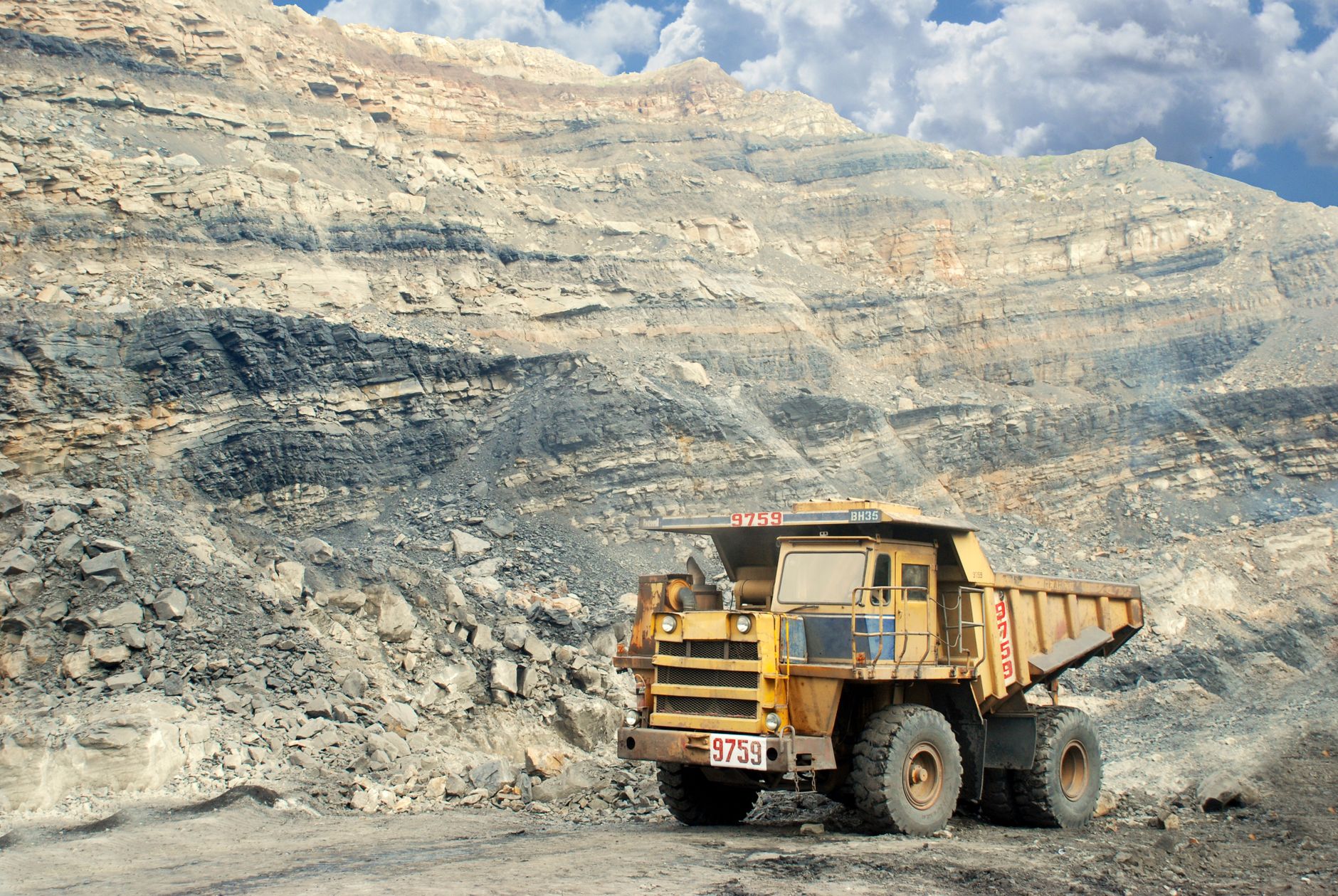
What exactly are rare earth minerals (“REE”)? The American Geoscience Institute defines these minerals as, “The rare earth elements (REE) are a set of seventeen metallic elements. These include the fifteen lanthanides on the periodic table plus scandium and yttrium” (Keane). These elements are critical to dozens of technologies in the modern world, including electronics, appliances, and advanced aircraft or military equipment. These elements have become especially important due to their wide scale uses in modern military and civilian technology. Now despite their name, REEs are actually quite abundant in the earth’s crust similar to other minerals, the difference comes with how much appears in one area. They earn their name due to their low concentrations and small grouping, mixture with radioactive materials, and the difficulty in extracting and separating these minerals due to their unique properties (Science History Institute). It’s important to realize these facts before discussing the pricise reasons why China has surged ahead of the United States in rare earth collection, extraction, and refinement. First, the decline of American production of REEs happened due to economic constraints. The rare earth mine, known as Mountain Pass in California, was the center of American production and one of the most dominant in the Western Hemisphere. Its height came during the 60s, Molycorp was an organization that mined Europium in Mountain pass, mainly for colored televisions which needed the mineral to produce the color red (NPR). The necessity of Europium for televisions created huge demand and led to extraordinary success for the Mountain Pass Mine. Throughout the next decades however, Mark Smith the former CEO of Molycorp recalls, “We toured them. We explained what we do, allowed them to take pictures and everything else. They took it back to China” (Feng). Many Chinese executives came through the Mountain Pass Mine on tours, where they would gather information they would later use to develop similar mines and eventually improve on the mining and processing. Over the next decades, China improved their own mines with the information gathered from Mountain Pass to take control of the mining of REEs globally, due to cheaper labor and much weaker environmental standards, that later essentially forced the Mountain Pass Mine out of business (Feng). Over time, this progression due to advanced tech overcame the American Rare Earth Mines and industry and led to almost all of them shutting down.
Second, China has monopolized their own minerals and the minerals of their neighbors to solidify control. Just south west of China sits the country of Myanmar which has been embroiled in civil war for decades due to its multi ethnic layout. That multi ethnic layout has led to mass instability where dozens of minority groups utilize gangs and armed forces to control land and prevent the Myanmar Government from mass murdering civilians of separate ethnic groups to the dominant Bamar group. This has lead to massive instability in the country and a chance for the Chinese government to dominate Myanmar which contains many natural resources, most relevant are REEs. In a Reuters article from June of last year that discusses how Chinese militias are capturing REEs in Myanmar, it writes, “Beijing is heavily reliant on Myanmar for the rare earth metals and oxides needed to produce them: the war-torn country was the source of nearly half those imports in the first four months of this year, Chinese customs data show” (Han). It’s clear that Myanmar is a major source of Chinese REEs, due to the tight control China has exerted over these areas to keep them secure. Additionally, China’s southern provinces have vast REE deposits. In three key areas across China, roughly 51 million metric tons of Rare Earth Elements can be found (China Briefing). While China controls foreign countries Rare Earth Elements, it alone has some of the world’s largest mines and natural reserves for REEs.
Third, China standardized and unified the industry to reduce conflict and create stable control. China’s consolidation of businesses in the REE sector allows for better price control and less competition for each of these large REE businesses. Which in turn allows businesses to force outside competitors out by lowering prices and reducing competition which created a monopoly through a few companies. NPR in an article about the Chinese monopoly of REEs said, “Within four years, China declared victory. It announced the closure of dozens of smaller mining and refining companies and guided the mergers of surviving companies into six supersized, mostly state-owned firms, nicknamed the Big Six in China” (Feng). The Chinese government strategically used methods of enforcement within the industry to slim out the overall amount of companies. In addition, the smaller number of companies allowed the Chinese government to more efficiently dominate the REE trade.
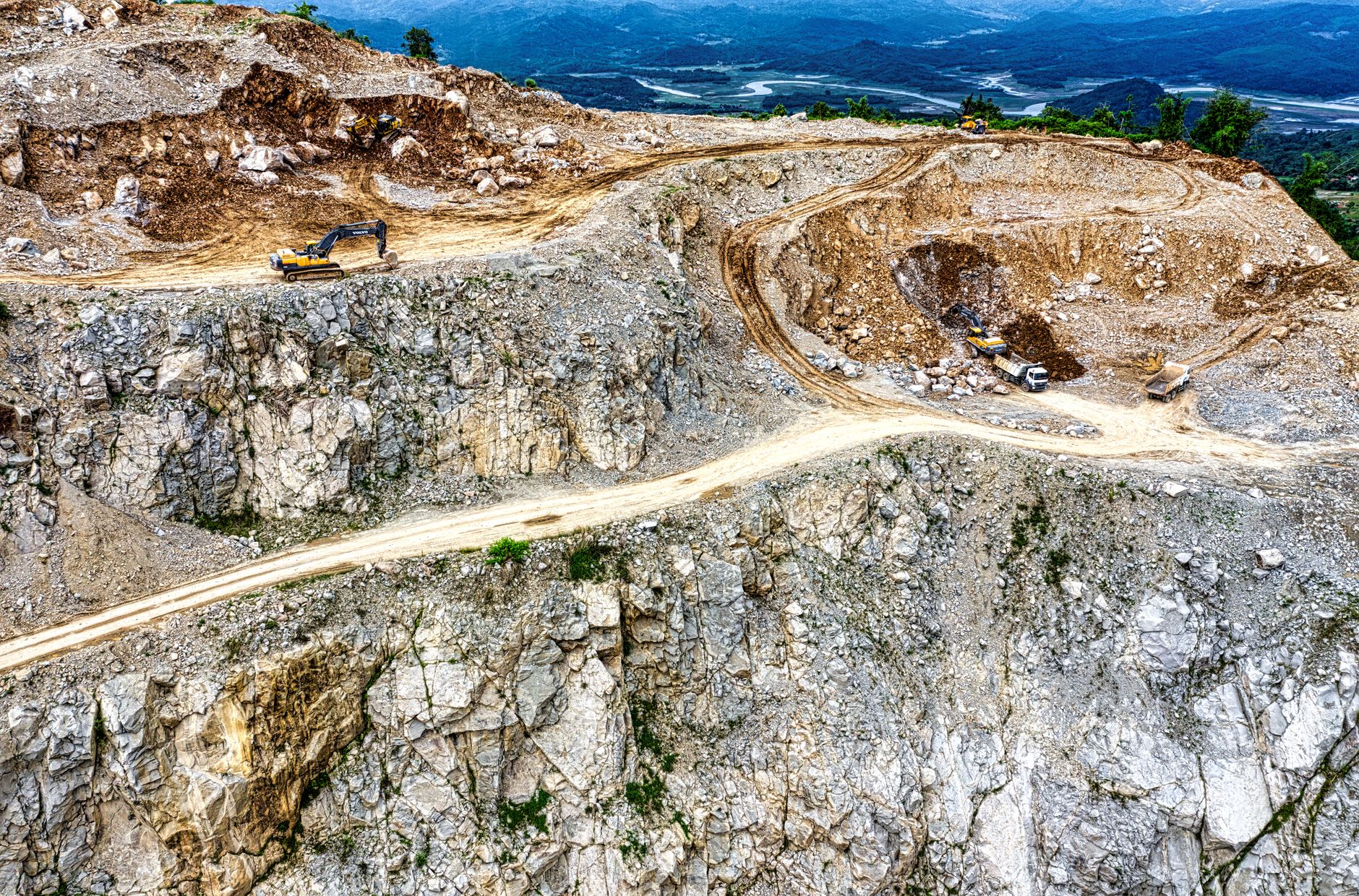
What does this all mean? Well after having covered how we got to this situation we need to realize what exactly that means. Overall, it comes down to providing a counter to American checks on Chinese power. Currently, China struggles with some major problems that limit its ability to grow globally. In an article by the International Journal of China Studies, they summarize the issues with the Malacca Strait by saying, “Hence, Beijing feels susceptible to this strategic weakness considering that any unexpected event could disrupt its trade flows and particularly oil imports, which could further deal a blow to China’s economic development, social stability and military operations” (Shaofeng 3). While this article is around ten years old it still holds relevant, as China has only started new projects to begin to circumvent this issue. It is abundantly clear that China has a weakness here, that is ever closer to being solved. Beyond the United States’ ability to block the strait of Malacca and sever China off, allies including Taiwan, Japan, South Korea, the Phillipines, and Australia provide a network of powers that further limit Chinese ability to expand their influence . The Chinese have already begun to counter this with initiatives like the Belt and Road Initiative aimed at creating a large Asian shipping highway and additional ocean shipping routes to attempt to solve some of the problems from the Malacca Strait conflict. The monopoly on REEs only provides an additional means of leverage that has already been used to great effect. Think about the most recent case of this, the trade conflict between the US and China last year. When Donald Trump added tariffs onto Chinese goods, they replied by blocking REEs being sold.The US. Chinese retaliation led to a panic within many industries, the Ford CEO said, “We have had to shut down factories. It’s hand-to-mouth right now” (Bown). Weaponization of this foreign monopoly creates unpredictability in many businesses’ supply chains. Especially considering the blockade mentioned previously went global because India, Europe, and Japan suffered similar blockades meaning businesses had no access to these critical resources (Bown).
What can we do? The clearest option is to expand domestic REE processing and introduce government support for the growing industry. PBS discusses in an article about recent efforts to revamp the American REE industry. It said, “The company, Phoenix Tailings, recently got a $500 million loan from the Pentagon to ramp up its work, after starting out eight years ago as a backyard lab seeking a cleaner metal-refining method. It’s just the latest critical minerals company the government has backed” (PBS News). These more recent efforts work to help stabilize the fluctuating industry by providing clear monetary support for these important endeavors. It is also necessary for the government to provide clear pathways and guidelines to ensure innovation alongside appointing officials within the government to moderate and support innovation (CFR). It is most important to target separation from the refinement sector of REEs because China controls roughly 92% of REE processing (Perera). This separation from China allows the US to begin to process more of its own resources within the US. The US needs to create a clear and uniform procedure for up and coming REE companies to gain funding and stability to encourage growth and innovation within the industry. Overall, the United States must promptly begin to implement these steps in order to eventually successfully catch up to China and prevent an abuse of their monopoly in the future when its effects will only be more substantial. If the United States wants to maintain its current power and influence it simply must act now.
Thank you for reading the first article on Beyond Our Border. Feel free to leave comments with any questions you may have.
Works Cited
Bown, Chad P. “The Trump-China Trade Wars: Five Takeaways from US Imports In 2025.” PIIE, 16 Mar. 2026, https://www.piie.com/blogs/realtime-economics/2026/trump-china-trade-wars-five-takeaways-us-imports-2025. Accessed 7 Aug. 2026.
China Briefing News. “China’s Rare Earth Elements: What Businesses Need to Know.” China Briefing News, July 2025, https://www.china-briefing.com/news/chinas-rare-earth-elements-dominance-in-global-supply-chains/. Accessed 6 Aug. 2026.
Feng, Emily. “The U.S. Once Had a Monopoly on Rare Earths. How It Lost to China.” NPR, May 2026, https://www.npr.org/2026/05/01/nx-s1-5800873/the-u-s-once-had-a-monopoly-on-rare-earths-how-it-lost-to-china. Accessed 5 Aug. 2026.
Han, Naw Betty, et al. “Exclusive: China-Backed Militia Secures Control of New Rare Earth Mines in Myanmar.” Reuters, 12 June 2025, https://www.reuters.com/world/china/china-backed-militia-secures-control-new-rare-earth-mines-myanmar-2025-06-12/. Accessed 6 Aug. 2026.
“How China Came to Rule the World of Rare Earth Elements.” NPR, 23 July 2025, https://www.npr.org/2025/07/23/nx-s1-5475137/china-rare-earth-elements. Accessed 5 Aug. 2026.
Keane, Christopher. “What Are Rare Earth Elements, and Why Are They Important?” AGI Geoscience Profession, 2018, https://profession.americangeosciences.org/collections/geoscience-faq/what-are-rare-earth-elements-and-why-are-they-important/. Accessed 5 Aug. 2026.
“Leapfrogging China’s Critical Minerals Dominance.” Council on Foreign Relations, 5 Feb. 2026, https://www.cfr.org/reports/leapfrogging-chinas-critical-minerals-dominance. Accessed 5 Aug. 2026.
PBS News. “U.S. Companies Work to Cut Reliance on China for Critical Minerals Used in Weapons.” PBS News, 3 Aug. 2026, https://www.pbs.org/newshour/nation/u-s-companies-work-to-cut-reliance-on-china-for-critical-minerals-used-in-weapons. Accessed 8 Aug. 2026.
Perera, Ayeshea. “Why China Curbing Rare Earth Exports Is a Huge Blow to the US.” BBC, 17 Apr. 2025, https://www.bbc.com/news/articles/c1drqeev36qo. Accessed 7 Aug. 2026.
Science History Institute. “History and Future of Rare Earth Elements.” Science History Institute, https://www.sciencehistory.org/education/classroom-activities/role-playing-games/case-of-rare-earth-elements/history-future/. Accessed 5 Aug. 2026.
Shaofeng, Chen. “China’s Self-Extrication from the ‘Malacca Dilemma’ and Implications.” International Journal of China Studies, vol. 1, no. 1, 2010, pp. 1–24, https://ics.um.edu.my/img/files/chen(1).pdf. Accessed 6 Aug. 2026.


Leave a comment