Only a couple hundred miles from the United States sits one of history’s most unstable countries. A country that was one of the first in the new world to gain independence. A country that struggled for over ten years to gain that independence, against one of the most powerful countries in Europe. A country that was the first Black-led republic in the world. A country that had dozens of coups and dictators across its history. Haiti’s fall from a promising young republic to a country of instability is a long and complicated story. However, currently, Haiti is falling even further, losing all sense of government. Without revitalized international support Haiti could become one of the biggest tragedies that the modern world has ever seen. In this essay, I will discuss the history of Haiti’s instability, the current factors causing its modern instability, and what the international community should do to solve this crisis.
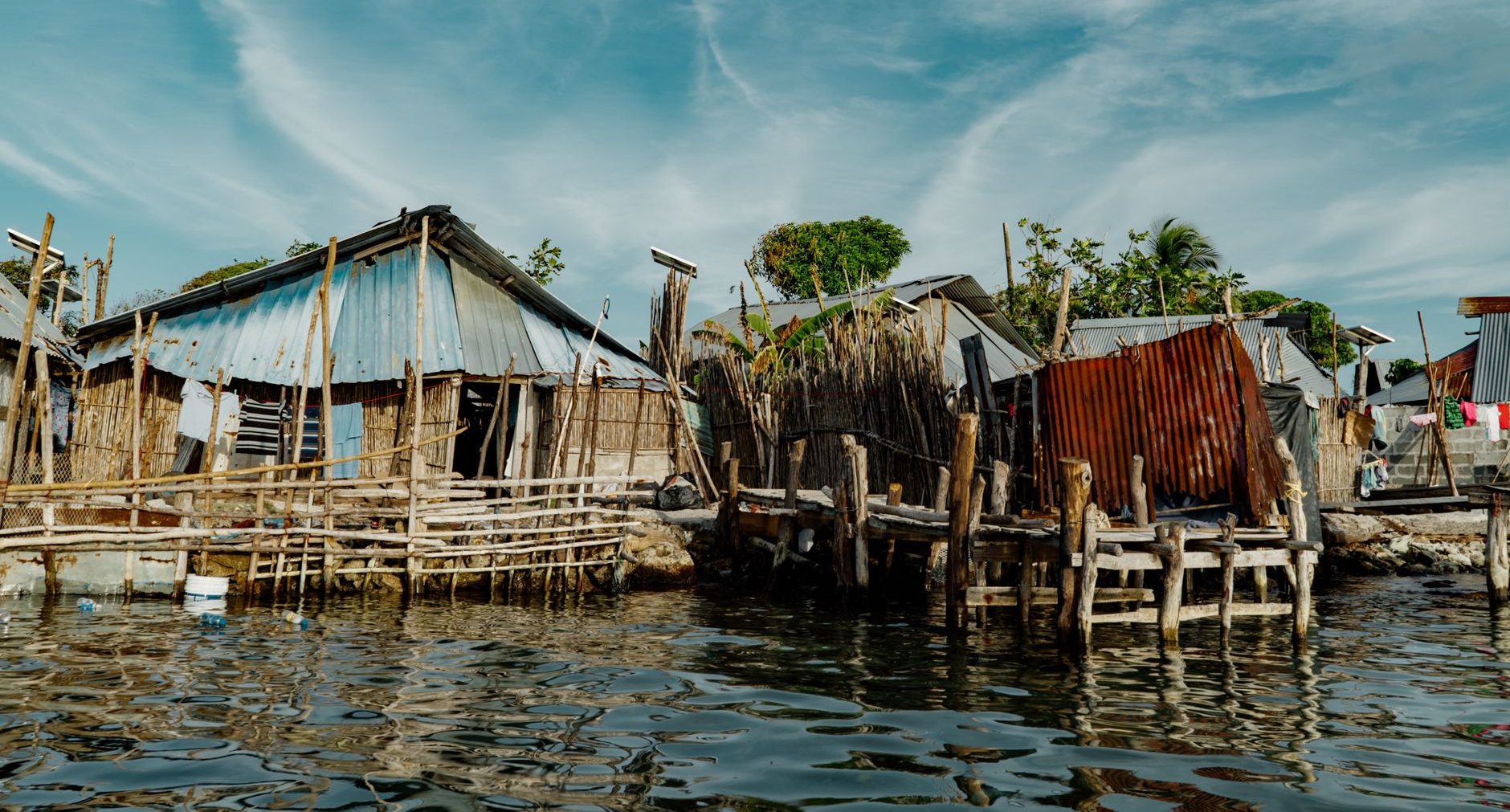
What is the history of Haiti? To over simplify its long and convoluted history, some events are not included, but that should not take away from understanding its history. Originally part of the Spanish colony of Hispaniola, the French eventually took over half of the island and used it to create many lucrative sugar plantations. Called Saint-Domingue, the new French colony became extremely diverse; with groups of slaves, free men, grands blancs, and petits blancs making up the social ranks of the colony (Lawless). This extreme diversity and large number of both enslaved and freed Black or mixed men, combined with a smaller white colonial population, created many problems within the social classes. Eventually, when slave uprisings began to consume the colony, it began to break down.
Over the following years, various rebellions, French conquest missions, and conflicts between different social classes led to chaos. Eventually, Jean-Jacques Dessalines and a group of freed, formerly enslaved men defeated the French and managed to establish independence on the island. At the very start of the country’s independence, Haiti was saddled with debt in exchange for France’s formal recognition of that independence (Lawless).
Skipping forward roughly a century, we come to the 1950s. From 1957 to 1986, the Duvalier family held control of the country (Center for Preventive Action). This father-son duo, often nicknamed Doc and Baby Doc, committed heinous human rights violations and engaged in political repression, eventually leading to their downfall. After Haiti attempted to transition to democracy, from 1990 to 2004, the United States initially gave, then withdrew, and finally helped overthrow the country’s initially elected leader, Jean-Bertrand Aristide (Center for Preventive Action). Over the following decade, Haiti fell into moderate instability, marked by constant UN peacekeeping, coups, assassinations, and fraudulent elections — which leads us to the modern day, where a weak government maintains little power within the country as internal rebellious groups continue to gain strength.
What are the current contributors to instability? The most pressing factor is gangs, which heavily impact the UN’s ability to mediate and the government’s ability to gain control. Gangs control supply chains and territory with a crushing grip, and this leads to police and the UN losing what little control they have, resulting in instability and worsening conditions. The gangs control local commerce and transportation routes. The United Nations Office on Drugs and Crime states that gangs dominate supply chains and extort commerce and humanitarian transport routes, giving them significant power to siphon off Haiti’s resources and destabilize its economy (“Explainer”). This dominance by the gangs prevents the spread of goods without the gang’s approval. Everything, including any potential humanitarian aid and UN troops, must pass through gang territories. Controlling commerce and supply chains means that many places the UN could otherwise use to avoid local land routes, such as ports, are under gang control as well. All of this leads to the simple fact that traversing the country means heavily interacting with these gangs, which creates a difficult task for troops trying to restore order.
Beyond local trade routes, Port-au-Prince, the country’s most populous city, has roughly 90 percent of its territory under gang control, which makes stabilizing Haiti extremely difficult (“Haiti’s Gang Violence Crisis”). Restoring order to the largest city is important: establish a government stronghold to allow humanitarian assistance to begin. Additionally after several earthquakes and hurricanes, the infrastructure in the capital is in severe disrepair making this harder. Port-au-Prince is so thoroughly infested with gangs, this task is extremely difficult. It hinges heavily on the strength of the local government and police, neither of which is currently capable of handling the gangs. Police and customs authorities are often targeted by gangs and struggle to supply their own agencies (“Explainer”). Airstrips, borders, and local shipments of goods and weapons are poorly managed and monitored given the lack of staff and resources necessary to maintain them. All of this is amplified by the fact that gangs control supply lines and can cut off resources the police desperately need. With the police in a predicament this severe, struggling even to maintain the territory under their control, the role the UN must play increases substantially. The government unfortunately provides no help there either, as Haiti has not held an election since 2016, and its last elected president was assassinated in 2021. Thus, the country currently has no elected sitting parliament or president (Robles et al.). Essentially, the government is in shambles, just like its police force. The UN must first help reinforce the interim government and a more capable police force if it wants to make progress.
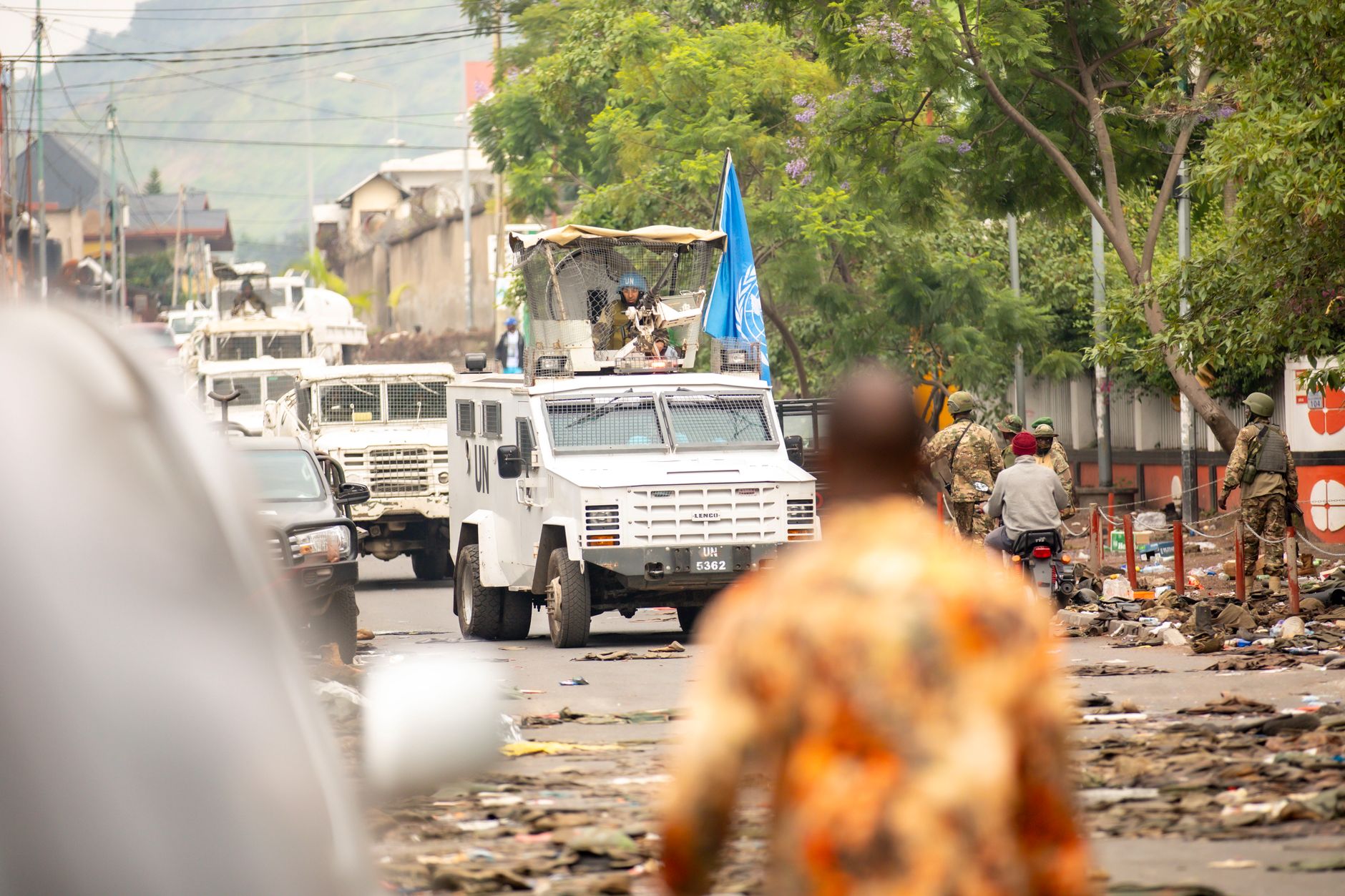
What are the consequences of this instability? They are wide-ranging and complex. However, the effects most detrimental to the population of Haiti include mass migration, food insecurity, and a lack of medical care throughout the country, with the latter two being in pressing need of humanitarian aid. All of this contributes to the humanitarian crisis that the UN is attempting to address. Starting with food insecurity, the UN estimates that nearly 5.7 million people are affected by food insecurity, with roughly 2 million people at emergency levels (“Haiti Explained”). That is millions of people who are not getting the nutrients they need and who are unable to keep food on the table daily. Hundreds of shipments are needed to accommodate those affected. Common motivators for criminal activity are money, food, and security; so food insecurity may drive many Haitians toward criminal activity, such as gangs, in order to keep their families fed and earn money. This logic is supported by Wanja Kaaria, the WFP Haiti country director, who states, “We cannot build peace when families have nothing to feed their children” (“More than Half of Haitians”).
Turning to medical care, due to gang violence, much of the local healthcare infrastructure has either shut down or been destroyed. The International Committee of the Red Cross states that many healthcare facilities have been looted or set on fire, and the few that remain are seeing an influx of twice as many patients as before (“Haiti: Making Impossible Choices”). With the infrastructure collapsing and with the remaining hospitals having to take on many more patients, many people slip through the cracks. Recognizing that many Haitians have limited access to, or are simply ignored by, the medical system means that many of those facing food insecurity are also unable to receive the medical attention they need, which only increases the burden on the UN. The UN would have to bring in millions of dollars’ worth of medical equipment, which is expensive, alongside food, to begin to combat these issues.
Lastly, migration remains a significant factor in the country. Nearly 1.5 million people are currently displaced within Haiti (“Haiti’s Displacement Crisis”). Internal migration in Haiti is happening due to the concentration of gangs in the capital city, so thousands of people move to the other cities in the country which have significantly less gang control. Also note that figure does not include the thousands more who are spread across the countries surrounding Haiti. This has been compounded by the Trump administration’s 2026 termination of Temporary Protected Status (TPS) for hundreds of thousands of Haitian nationals living in the United States, exposing many to deportation back into the crisis. To effectively address the issue of migration, stability needs to be achieved, both to manage displacement within the country and to create incentives for those who have fled to return.
What can the United States do, and why? Considering all of my research, evidence, and analysis, my conclusion is that the United States should not attempt to intervene directly in the politics of Haiti. Haiti’s current circumstances trace back, in part, to United States backed coups and political interventions in the 2000s, and it is clear that these efforts only created further political weakness and instability within Haiti. An article from Air University, a center for military studies, supports this view, suggesting that the United States take a non-interference stance toward Haiti’s political development and instead support the country through diplomatic means (“Haiti’s Instability”). However, it should still be noted that the United States has an interest in a stable Haiti. Haiti currently functions as a regional transit point through which drugs and arms flow across many countries in the area. Stopping that flow from destabilizing other countries and reaching the United States is a notable American interest (Shell). If the United States has a vested interest in stabilizing Haiti, but should stay out of Haiti’s internal politics, what can it do instead? It should support the UN’s Gang Suppression Force (GSF), which is the UN’s most recent attempt to create stability in Haiti. The Carnegie Endowment for International Peace outlines a best-case scenario for the GSF, arguing that, with adequate resources, it could successfully neutralize gang leaders and retake control of key infrastructure points (Shell). It is clear that well-considered United States policy decisions could produce real change. In conclusion, Haiti, a nation with an immense history, currently suffers from instability for a variety of reasons, but if the United States makes the right policy choices and does not try to interfere politically again,real change may occur.
Works Cited
Center for Preventive Action. “Instability in Haiti.” Global Conflict Tracker, 27 June 2024, https://www.cfr.org/global-conflict-tracker/conflict/instability-haiti. Accessed 23 Aug. 2026.
“Explainer: Organized Crime and Gang Violence in Haiti.” United Nations Office on Drugs and Crime, 2026, https://www.unodc.org/unodc/frontpage/2026/January/explainer_-organized-crime-and-gang-violence-in-haiti.html. Accessed 23 Aug. 2026.
“Haiti Explained: Why the Crisis Is Deepening — and What Comes Next.” UN News, 21 Jan. 2026, https://news.un.org/en/story/2026/01/1166801. Accessed 4 Sept. 2026.
“Haiti: Making Impossible Choices in a Health-Care System on the Verge of Collapse.” International Committee of the Red Cross, 23 Oct. 2025, https://www.icrc.org/en/article/haiti-making-impossible-choices-health-care-system-verge-collapse. Accessed 4 Sept. 2026.
“Haiti’s Displacement Crisis Hits Record 1.5 Million Amid Escalating Violence.” International Organization for Migration, 5 June 2026, https://www.iom.int/news/haitis-displacement-crisis-hits-record-15-million-amid-escalating-violence. Accessed 4 Sept. 2026.
“Haiti’s Gang Violence Crisis: What to Know and How to Help.” International Rescue Committee, 2022, https://www.rescue.org/article/haitis-gang-violence-crisis-what-know-and-how-help. Accessed 23 Aug. 2026.
“Haiti’s Instability and Its Effect on U.S. Security.” Air University (AU), 2 June 2025, https://www.airuniversity.af.edu/Wild-Blue-Yonder/Article-Display/Article/4203031/haitis-instability-and-its-effect-on-us-security/. Accessed 12 Sept. 2026.
Lawless, Robert. “History of Haiti | Revolution, Independence, Flag, & Map.” Encyclopedia Britannica, 27 July 2023, https://www.britannica.com/topic/history-of-Haiti#ref358900. Accessed 23 Aug. 2026.
“More than Half of Haitians Continue to Face Food Crisis.” UN News, 17 Apr. 2026, https://news.un.org/en/story/2026/04/1167328. Accessed 4 Sept. 2026.
Robles, Frances, et al. “Haiti Reaches ‘Full Crisis’ as Transition Government Expires.” The New York Times, 6 Feb. 2026, https://www.nytimes.com/2026/02/06/world/americas/haiti-crisis-leadership-gangs.html. Accessed 3 Sept. 2026.
Shell, Christopher. “Securing America’s Near Abroad: Recalibrating U.S. Policy Toward Haiti.” Carnegie Endowment for International Peace, 9 July 2026, https://carnegieendowment.org/research/2026/07/recalibrating-us-policy-toward-haiti. Accessed 12 Sept. 2026.


Leave a comment