In the middle of Central Asia, boat hulls lie half buried miles from the shores they once sailed. Towns once known for their fishing or lake access are now kilometers from the nearest coastline. This is the current reality for many towns and communities across Karakalpakstan, an autonomous republic within Uzbekistan. The Aral Sea was once the fourth-largest lake in the world; however, primarily because of Soviet-era irrigation projects, the sea has been drying up. The lake is now a fraction of its former size, and its decline, which has many parallels to the problems facing the Great Salt Lake, has caused serious health, geographic, and economic problems. As climate change becomes a more pressing issue, it is necessary to understand its effects before they get further out of hand, especially considering that water levels in Lake Mead and the Great Salt Lake are worsening every year due to drought. In this essay, I will discuss the history and causes of the current Aral Sea crisis, the impacts of the crisis, and of what the United States should take note.
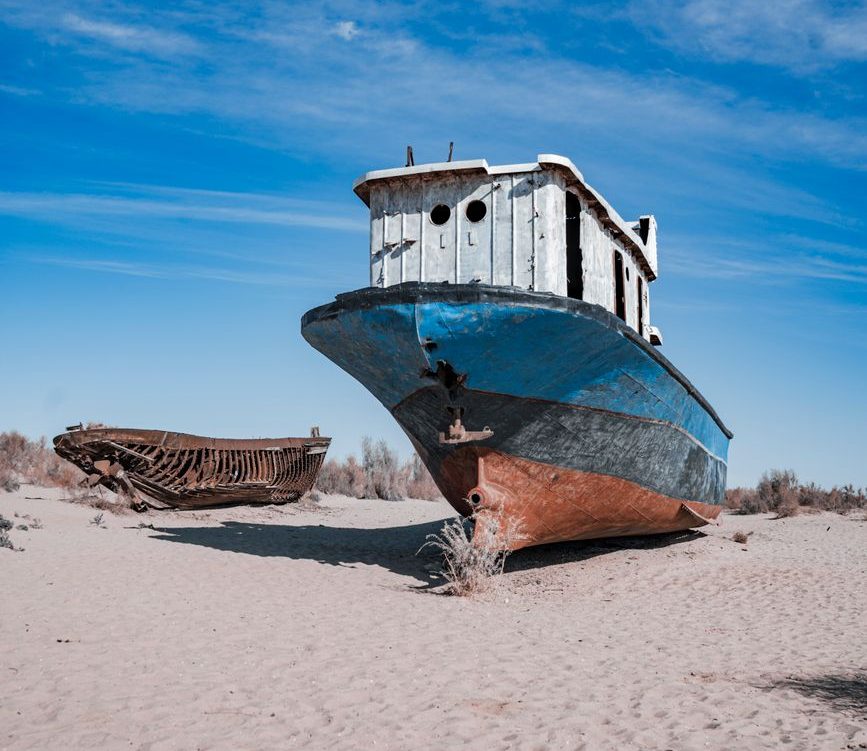
What is the cause of the current crisis? To answer that question, the history and importance of this region should be discussed first. The Aral Sea sits on the modern border between Kazakhstan and Karakalpakstan. Located in the middle of the vast drylands and deserts of Central Asia, the Aral Sea was an important location for both travelers and military expeditions. Its water long allowed for larger communities and stopping points for incoming trade and armies, and for centuries it served as a beacon for communities and settlements in Central Asia. During the Soviet era, however, the sea’s tributaries became part of a broader effort to “transform nature” (Jabbarov et al.). Beginning in the 1960s, the Amu Darya and Syr Darya rivers were diverted to irrigate the region’s important cotton industry (Conrad and Kobildjanova 1). When water flowing down from the mountains is diverted for cotton farming, far less water reaches the sea. This transformed the desert into usable farmland at the cost of the Aral Sea. In fact, “In some years there was no flow from the Syr Darya into the northern portion of the Aral Sea” (Conrad and Kobildjanova 2). Overall, the sharp decrease in water flow led to a massive loss in the sea’s size. In 1987, the sea split into a northern and a southern part (Conrad and Kobildjanova 2), and the southern part later divided into eastern and western lobes that were only tenuously connected before separating completely (NASA Earth Observatory). Because of this split, each section received water from only one of the two rivers that once fed the whole sea. The loss was most visible in the receding shoreline and the shrinking volume of the sea. In a Cornell University paper, Jon Conrad and Kamola Kobildjanova state, “Between 1960 and 2003, the level of the North Aral Sea fell by about 12 meters and the South Aral Sea by 23 meters, with the total area of both seas decreasing by a staggering 74 percent and the total volume decreasing by 84 percent from its 1960 level” (2). It is evident that the loss in water volume is a direct effect of diverting water away from the Aral Sea. That diversion, and the lack of water that followed, exposed the salty seafloor, which had detrimental effects on local marine life.
What are the major effects of the Aral Sea crisis? The major effects are environmental damage, significant health risks, and economic problems. The environmental effects include increased salinity and dust storms. Increased salinity is a substantial problem: when the water level drops, the water evaporates, but its salt and chemicals stay behind, concentrating in the water that remains. The rising salt content made the water unsafe to drink and wiped out once-plentiful fish such as sturgeon, carp, barbel, and roach (“Aral Sea”). This increase in salinity destroyed many of the benefits the Aral Sea once provided. The falling water level has had a separate effect as well: dust storms have become a common phenomenon around the region. These storms form when the receding sea leaves salt and minerals behind on the exposed seabed, and strong winds pick them up (Thompson). Dust storms cause numerous problems, including crop damage and health impacts.
These health impacts are serious and cannot be easily ignored. Because pesticides were used heavily in the region, the dust storms carry salt and toxic chemical residue along with them. Exposure to this dust, together with contaminated drinking water, has been linked to respiratory illness, tuberculosis, and cancer (Mirzalieva; Ataniyazova 4). In general, the environmental effects have damaged both the land and the people.
Another major effect is the economic stress created by the Aral Sea crisis, notably damage to the farming sector and the fishing industry. The farming sector suffers severely from the desertification of the region caused by the loss of water. This is caused most directly by the rising salinity of the soil. According to Oral Ataniyazova, “Currently, over 70% of the irrigated land in Karakalpakstan is affected by salinity, and problems are worsening. Already agricultural output has declined by 30-50% due to soil salinity, climate change, water deficiency, and reduced labor productivity due to health problems” (3). This statistic does not include the regions of Kazakhstan that directly border the Aral Sea, so it may understate the full economic effect of the sea’s loss. Salt carried by the storms also leaves a thin coat on many farmers’ crops, ruining the produce, and has disrupted air traffic across Turkmenistan and Uzbekistan (Schulz). Besides reducing overall agricultural output, this adds a level of uncertainty to the industry, as a few too many storms could leave a farmer’s entire field inedible. The other sector at risk is fishing, which has lost much of its workforce. Roughly 40,000 to 60,000 fishermen lost their livelihoods because of the water loss. Fishing and related activities once provided about 50 percent of Karakalpakstan’s income (Ataniyazova 2). This is a considerable loss, especially for a region whose people are a largely underrepresented minority within Uzbekistan. These economic effects significantly impact the territory and its success in the long term.
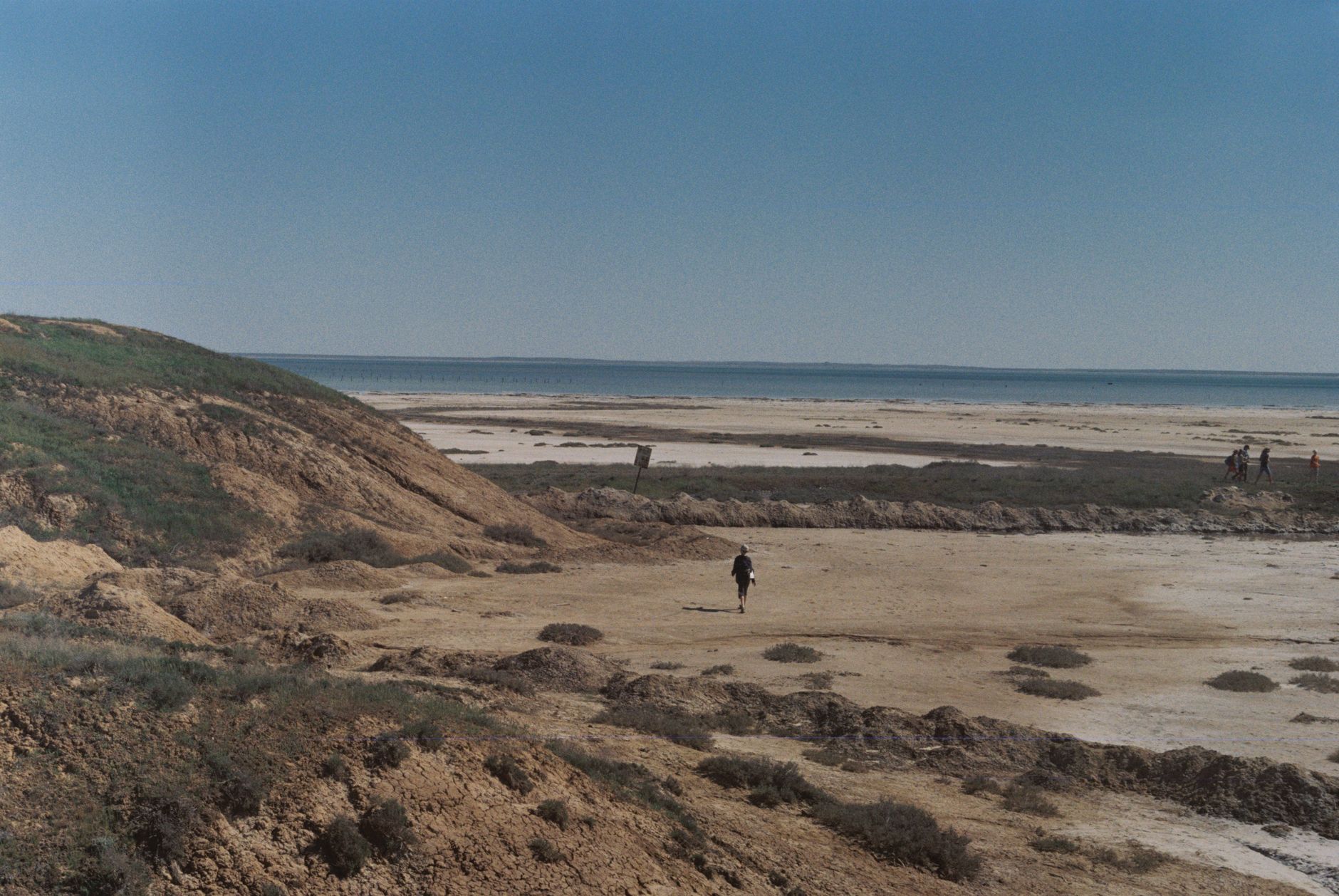
Why is this important for the United States? The United States is facing similar water-loss crises in places like the Colorado River, Lake Mead, and the Great Salt Lake. It should reflect on the problems the countries around the Aral Sea face and the solutions they have attempted in order to decide how to manage its own. One limit to this is the current availability of information on the crisis. As Igor Plotnikov and his co-authors explain:
Yet, unlike the vanishing rain forests or damage to the coral reefs, the Aral Sea crisis has yet to gain full international attention. To illustrate this, a search in the Web of Science (title field; core collection; last five years) offered 260 hits for the Colorado River but only 144 for the Aral Sea. Even more critically, limiting the search to just the journals Nature and Science offered only a single hit for the Aral Sea but five for the Colorado River. (Plotnikov et al.)
Although understanding this crisis is pressing, not enough research on it is currently available or accessible. The United States should work with local governments to gain critical insight into the problems caused by the Aral Sea’s decline because of its key similarities to the Great Salt Lake, specifically the two lakes’ salt and mineral content, their rapid loss of water, and the methods used to address the problem. With data centers and other projects driving up demand for water across the United States, water loss is a growing issue, and the United States should look to previous crises around the world to solve it.
In conclusion, the Aral Sea crisis has caused a variety of negative effects that the United States can and should learn from in order to prevent its own water problems from worsening.
Works Cited
“Aral Sea.” Encyclopædia Britannica, 17 Sept. 2026, http://www.britannica.com/place/Aral-Sea. Accessed 12 Oct. 2026.
Ataniyazova, Oral A. “Health and Ecological Consequences of the Aral Sea Crisis.” 3rd World Water Forum, 18 Mar. 2003, Kyoto, Japan. University of Texas at Austin, http://www.caee.utexas.edu/prof/mckinney/ce385d/papers/atanizaova_wwf3.pdf. Accessed 12 Oct. 2026.
Conrad, Jon M., and Kamola Kobildjanova. “The Economics of an Environmental Disaster: The Aral Sea.” Cornell University, 2011, http://www.cs.cornell.edu/courses/cs6702/2011sp/readings/AralSea2011.pdf. Accessed 7 Oct. 2026.
Jabbarov, Zafarjon, et al. “Shrinking of the Aral Sea: Causes, Effects, Possibilities of Revitalization.” Journal of Scientific Research and Reports, vol. 30, no. 12, Dec. 2024, pp. 66-80, https://doi.org/10.9734/jsrr/2024/v30i122651.
Mirzalieva, Zumrad. “How Development Shaped the Shrinking of Aral Sea.” Manchester Calling, University of Manchester, 25 Apr. 2019, blogs.manchester.ac.uk/hcri/2019/04/25/how-development-shaped-the-shrinking-of-aral-sea/. Accessed 12 Oct. 2026.
NASA Earth Observatory. “World of Change: Shrinking Aral Sea.” NASA Science, 19 May 2009, science.nasa.gov/earth/earth-observatory/world-of-change/aral-sea/. Accessed 7 Oct. 2026.
Plotnikov, Igor S., et al. “Past, Present and Future of the Aral Sea: A Review of Its Fauna and Flora before and during the Regression Crisis.” Zoological Studies, vol. 62, 2023, e19, https://doi.org/10.6620/ZS.2023.62-19.
Schulz, Dante. “The Cautionary Tale of the Aral Sea: Environmental Destruction at Economic Costs.” Caspian Policy Center, 30 Dec. 2020, caspianpolicy.org/research/environment/the-cautionary-tale-of-the-aral-sea-environmental-destruction-at-economic-costs-12361. Accessed 12 Oct. 2026.
Thompson. “Environmental Impacts.” The Aral Sea Crisis, Columbia University, 2008, http://www.columbia.edu/~tmt2120/environmental%20impacts.htm. Accessed 12 Oct. 2026.


Leave a Reply