In one of the most populous nations in the world, the successor to a religious, cultural, and regional figurehead has been missing for three decades. In May 1995, six years after the death of the tenth Panchen Lama, the Dalai Lama recognized a six-year-old boy, Gedhun Choekyi Nyima, as the Panchen Lama’s reincarnation. Within days, the boy vanished into Chinese government custody, and he has not been seen in public since (Anand). The struggle over Tibetan succession continues today: in July 2025, the Dalai Lama declared that only his own office, not Beijing, would have the authority to identify his successor (MacRae). When examining China in the modern era, one region stands out: Tibet. Nicknamed “the Roof of the World,” Tibet sits at an average elevation of more than 14,000 feet. For scale, that is roughly the height of the summit of Mount Whitney, the tallest peak in the contiguous United States.
So why is a territory like Tibet so important to China? The answer is water—specifically, China’s use of Tibet’s headwaters in its foreign and domestic policy. This essay will discuss the history of Tibet, the effect of Tibet’s headwaters on Chinese policy, and what the United States and its allies should consider when approaching the issue.
What is Tibet’s historical relationship with China? Tibet has a long and controversial relationship with China proper. For centuries, Tibet was largely an independent kingdom outside Chinese control. Occasionally an outside power, such as the Mongol Empire under Genghis Khan’s successors, would conquer the region and exert control before eventually receding. However, as powerful gunpowder empires emerged across Asia, including China’s Qing Dynasty, Tibet became a promising territory for expansion. The Qing Dynasty took control of the region in the eighteenth century but exercised only limited power, allowing Tibet to remain largely self-governing while still part of the empire. As the Qing declined in the nineteenth century, European empires moved into the region. Russia expanded into Central Asia while Britain took root in India, and a rivalry known as “the Great Game” began. In this contest for influence, the two empires used treaties, agreements, and buffer zones to secure their borders and gain every possible advantage. One such agreement, the Simla Convention of 1914, negotiated among Britain, China, and Tibet, produced the McMahon Line, which still marks the eastern sector of the India-China border. China has never recognized the line, viewing it as a product of colonialism, and the border remains disputed today (Bhadauriya).
Fast forward several decades: in 1949, after years of civil war, Mao Zedong’s Communist Party took power, and China’s goals shifted. Its priorities now lay in centralizing control and building a communist state in both its population and its government. Tibet’s globally recognized culture posed a daunting challenge to that project. According to Encyclopædia Britannica, “Greatest publicity attended Beijing’s dispatch of troops to Tibet about the same time that it intervened in Korea. The distinctiveness and world reputation of the Tibetan culture was to make this a severe test of communist efforts to complete the consolidation of their power” (“China: Reconstruction”).
Subduing Tibet, in other words, would demonstrate the success of the consolidation China had worked toward since the revolution. Tibetans rebelled several times, most notably in 1959, when the Dalai Lama fled to India, and the result was repeated and brutal Chinese crackdowns. Beijing pursued social change, placed Chinese officials in local government positions, and took heavy-handed steps to sway popular opinion toward the Communist government, all in order to monopolize power over the Tibetan people. The Chinese government has also attempted to control the cultural and religious heart of Tibet. Beijing claims the authority to approve the reincarnations of Tibetan Buddhist lamas, maintains a database of state-approved “living buddhas,” and denounces recognitions made by the Dalai Lama, who lives in exile in India (Anand). By controlling who is recognized as a reincarnation, China hopes to control the future of Tibetan Buddhism, one of the few institutions in Tibetan society that still opposes it. Over the past seven decades, China has taken many steps to monopolize its jurisdiction over nearly every aspect of Tibetan life.
Tibet must be important enough to warrant such force.
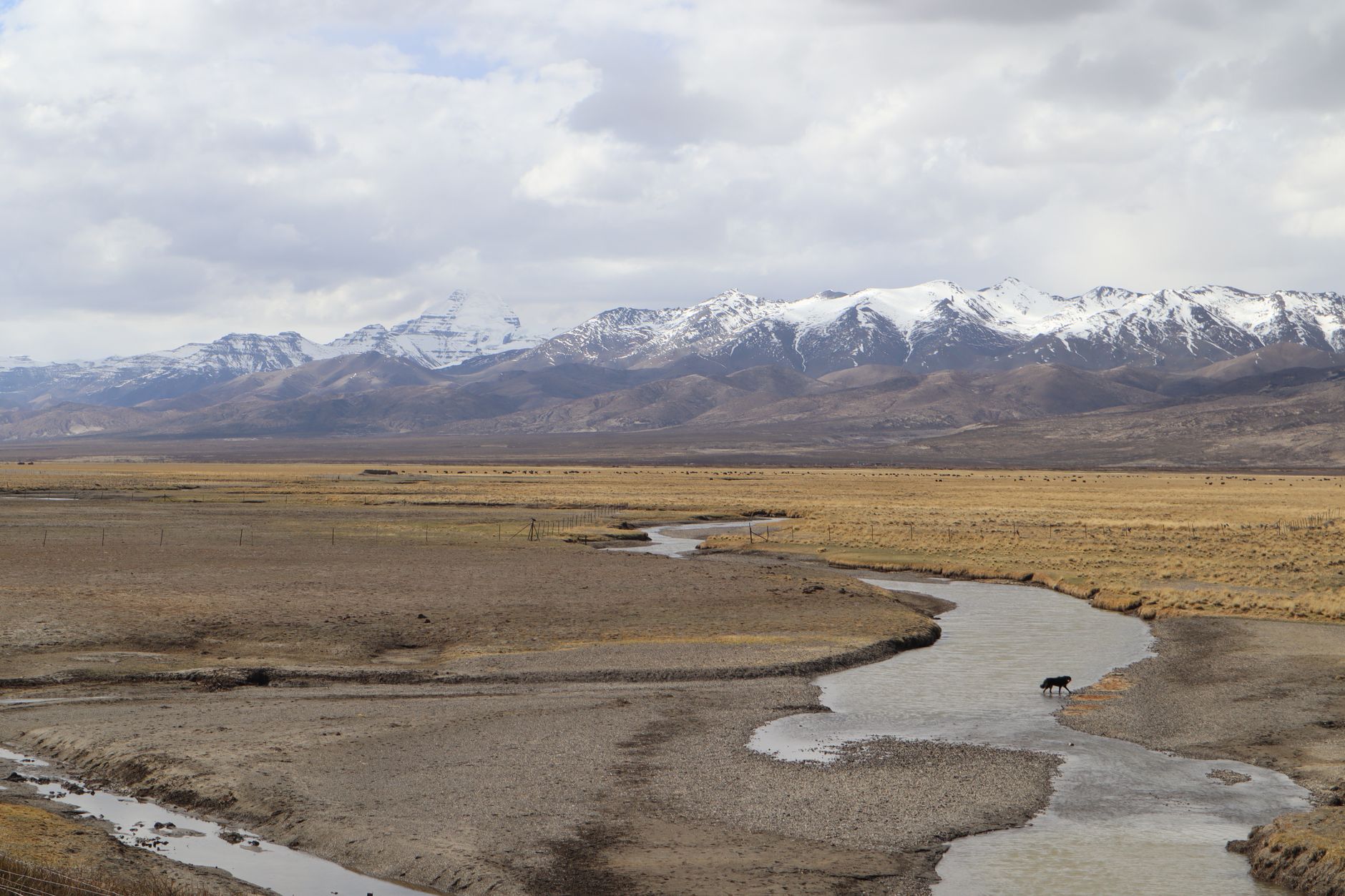
Why is Tibet so important? It comes down to a resource every human being needs: water. According to The Diplomat, “Tibet, known as the ‘Water Tower of Asia,’ serves as the source of 10 major Asian river systems flowing into 10 countries, including many of the most densely populated nations in the world: China, India, Vietnam, Cambodia, Laos, Thailand, Burma, Bangladesh, Nepal, Bhutan, and Pakistan” (Palmo). The rivers that begin on the Tibetan Plateau feed an enormous share of Asia’s population, including people in U.S. partners such as India and treaty allies such as Thailand. This gives China a geographic advantage over almost all of South and Southeast Asia. It also guarantees that China can regulate the rivers and waterways crucial to its own economy and society. A Council on Foreign Relations backgrounder on the plateau’s headwaters explains:
The most critical transboundary river basins formed by Himalayan rivers are the Ganges-Brahmaputra-Meghna, Indus, and Mekong basins, the largest in area and population served. Despite a seeming abundance of rivers in the Himalayan-Hindu Kush mountains, Asia—the most populous continent—has less freshwater available per capita than any other region. The looming threat resonates in the foothills of the Himalayas. (Albert)
The power to reduce the freshwater available to some of the world’s fastest-growing countries creates existential problems, most notably the question of how a country recovers from such severe losses. For some of the largest countries on Earth, such as India and Pakistan, meeting the needs of an enormous population with less and less fresh water would limit both population growth and industrial growth. The Yarlung Tsangpo, known as the Brahmaputra in India and the Jamuna in Bangladesh, begins in Tibet and flows through both countries, and actions taken upstream, including dam construction, can alter the water flow, agriculture, and ecological balance of the downstream nations. Despite these risks, China announced in December 2024 a massive new hydropower project on the river’s lower reaches, just before the river turns south into India, prompting concern from both India and Bangladesh (Jeshong and Dolma).
The ability to damage the economies and societies of countries like Bangladesh and India while building useful power infrastructure for itself is an advantage China is fully exploiting, as its dams on Southeast Asian rivers show. A study by the research firm Eyes on Earth, funded by the U.S. State Department’s Lower Mekong Initiative, found that China’s eleven operating megadams on the Mekong are causing recurring droughts and damage downstream in Thailand, Laos, Cambodia, and Vietnam; nevertheless, China continues to build more dams on the Mekong and on other international rivers before they leave its territory (Chellaney). Drying out Southeast Asia, one of the most ecologically diverse regions in the world, could push many species toward population collapse or extinction as land becomes drier and shifts away from the habitat conditions they depend on. China has repeatedly used infrastructure as a tool of coercion and leverage over its neighbors (Hader et al.), and dams in Tibet are another example of this strategy. China has deliberately shaped its policy in Tibet to exploit the geographic advantages it gained through its long-term efforts to suppress the Tibetan people and culture.
What should the United States do? The answer comes down to two main ideas: supporting Nepal and India in countering China and developing reasonable alternatives, and supporting Tibetan groups that oppose Beijing’s rule. These two approaches are the clearest way for the United States to support its partners while challenging Chinese dominance over the headwaters.
India and Nepal are two U.S. partners particularly affected by China. One of the rivers China’s dam builders are currently targeting is the Brahmaputra, which is vital to northeastern India and Bangladesh (Chellaney). The United States should use this situation to build closer ties with these countries by helping them respond to Chinese threats. Cooperation is especially important for India: the 2020 clashes along the Sino-Indian border showed the need to understand how China might weaponize its control over headwaters against the Indian economy (Singh and Tembey).
India urgently needs to understand how to counter China’s advantage, and the United States should take that need into account as it builds closer ties with India and its neighbors. According to the Center for Strategic and International Studies, the United States should foster cooperation among the United States, Nepal, and India through economic and technological partnerships, infrastructure development, and planning for water scarcity (Hader et al.). These strategies would help offset some of the effects of China’s increased damming of river headwaters. They would also create partnerships that extend beyond countering China and would likely draw India closer to the United States.
Supporting Tibetan groups that oppose Chinese rule is a smaller but complementary effort. U.S. support for these groups would demonstrate clear and decisive opposition to China’s continued repression in Tibet and its abuse of headwater control. As Narain Batra argues, supporting Tibet is a foreign policy shift that can serve as an important geopolitical counter to Chinese assertiveness in Asia; he recommends elevating the Central Tibetan Administration, the Tibetan government-in-exile, without recognizing Tibetan independence. This shift could worsen relations with China, but it would also give the United States new diplomatic leverage by challenging the legitimacy of Chinese rule and domestic policy while clearly supporting religious and cultural groups within Tibet.
China’s control over the Tibetan Plateau and the headwaters of some of the world’s most important rivers is a problem that many countries will have to confront in the coming years. It is also an opportunity: the United States should use the threats created by China to build bridges and alliances throughout South and Southeast Asia.
Works Cited
Albert, Eleanor. “Water Clouds on the Tibetan Plateau.” Council on Foreign Relations, 9 May 2016, http://www.cfr.org/backgrounders/water-clouds-tibetan-plateau. Accessed 21 Nov. 2026.
Anand, Dibyesh. “Why China Cannot Choose the Next Dalai Lama.” East Asia Forum, 12 Sept. 2026, eastasiaforum.org/2026/09/12/why-china-cannot-choose-the-next-dalai-lama/. Accessed 21 Nov. 2026.
Batra, Narain. “Why America Must Support Tibet.” Diplomatist, 14 July 2025, diplomatist.com/why-america-must-support-tibet/. Accessed 21 Nov. 2026.
Bhadauriya, Vishal Singh. “The Colonial Strategy and India-China Conflict: Past, Present, and Future.” Georgetown Journal of International Affairs, 18 Jan. 2025, gjia.georgetown.edu/conflict-security/the-colonial-strategy-and-india-china-conflict-past-present-and-future/. Accessed 21 Nov. 2026.
Chellaney, Brahma. “China Leverages Tibetan Plateau’s Water Wealth.” Georgetown Journal of International Affairs, 16 June 2020, gjia.georgetown.edu/science-technology/china-leverages-tibetan-plateaus-water-wealth/. Accessed 21 Nov. 2026.
“China: Reconstruction and Consolidation, 1949–52.” Encyclopædia Britannica, http://www.britannica.com/place/China/Reconstruction-and-consolidation-1949-52. Accessed 21 Nov. 2026.
Hader, Thomas, et al. “China’s Gray-Zone Infrastructure Strategy on the Tibetan Plateau: Roads, Dams, and Digital Domination.” Center for Strategic and International Studies, 4 June 2025, http://www.csis.org/analysis/chinas-gray-zone-infrastructure-strategy-tibetan-plateau-roads-dams-and-digital-domination. Accessed 21 Nov. 2026.
Jeshong, Tsewang Dorji, and Kalsang Dolma. “China’s Strategy to Escalate Water War over Tibet’s River.” Central Tibetan Administration, 4 Aug. 2025, tibet.net/chinas-strategy-to-escalate-water-war-over-tibets-river/. Accessed 21 Nov. 2026.
MacRae, Penelope. “Dalai Lama Defies China to Say Successor Will Be Chosen by Tibetan Tradition.” The Guardian, 2 July 2025, http://www.theguardian.com/world/2025/jul/02/dalai-lama-says-there-will-be-search-for-his-successor-ending-years-of-speculation. Accessed 21 Nov. 2026.
Palmo, Dechen. “Tibet’s Rivers Will Determine Asia’s Future.” The Diplomat, Nov. 2019, thediplomat.com/2019/11/tibets-rivers-will-determine-asias-future/. Accessed 21 Nov. 2026.
Singh, Ameya Pratap, and Urvi Tembey. “India-China Relations and the Geopolitics of Water.” The Interpreter, Lowy Institute, 23 July 2020, http://www.lowyinstitute.org/the-interpreter/india-china-relations-geopolitics-water. Accessed 21 Nov. 2026.


Leave a Reply